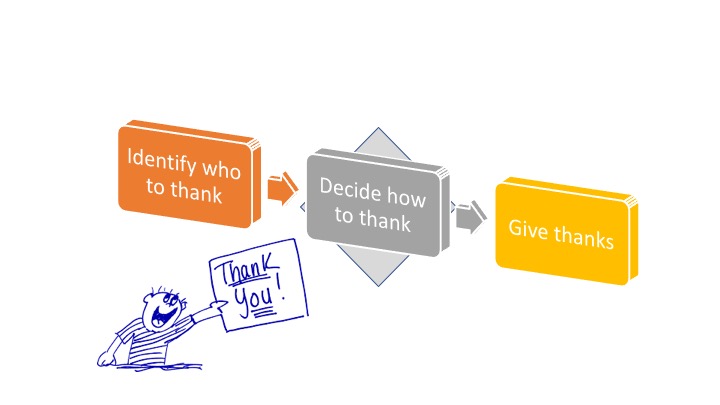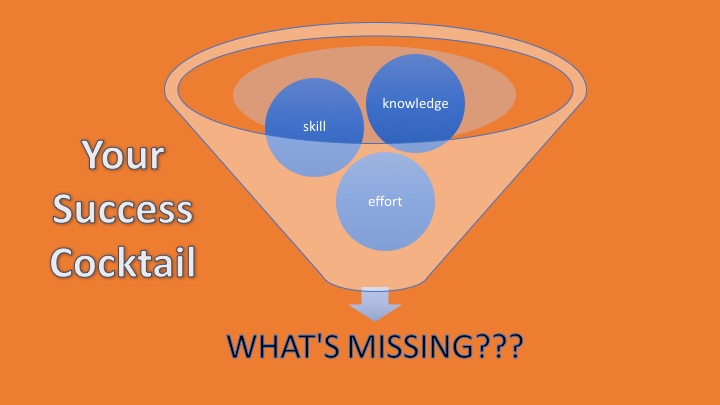
Is saying thank you necessary to employees, co-workers, vendors, suppliers? Absolutely not, there’s no intrinsic obligation to give any extra, seasonal or out of the ordinary thanks, no reason at all…well maybe one. It makes a difference; maybe to the person receiving the “thank you” but definitely to the one giving it. An attitude of gratitude goes a long way to feeling good about your job and about yourself. Still, there’s appropriate ways, meaningful ways and better ways to do it, let’s take a look…

Seasonal Thanks

Because it’s Thanksgiving perhaps there’s a built-in excuse to give thanks but that doesn’t make it any less impactful to receive it, especially when it’s direct and unexpected. If you want to really get the give-get joy of thanks then preference the one-on-one thank you over the group. Believe it or not a direct spoken word is more meaningful than a material gift or even cash…of course combining the two won’t lose you any points.

Waiting to give out the “holiday bonus” is a common strategy for thanks but we all know that once received once employees quickly develop a sense of entitlement and feel deserved satisfaction rather than appreciativeness. That’s not to say it isn’t a valid appreciation gesture but understand how thanks will be received so you don’t get cynical about the giving. Add the one-on-one handshake and a message to the bonus check and you’ve got something better than a smile at a bank statement. By the way, this all works just as well if you are “thanking up” the chain or peer-to-peer too.

Impactful Thanks

In order of most to least there’s no question that taking someone aside, in person and in private and saying something like, “I just want you to know that I appreciate the job and the effort you give and would like to say thank you for what you’ve done this year.” An appropriate touch, like a handshake (bonus for the free hand atop the shake) personalizes it. A group announcement allows people to disassociate unless each person is named. A handwritten note (not a signed computer printout) would come next, a phone call can be an appropriate substitute if shifts or geography demands but a voice mail is a distant finisher to calling back to get the person. Email is a common method of showing appreciation and it’s not that it won’t convey that message it is simply less affecting, a group message shows a lack of any effort. Let’s not even put a text message on the list, no matter how many emojis!

Think of thanks impact as a parallel to breaking up, the hardest one, face-to-face, shows the most character while the text shows the most cowardice. Obviously this needs to be both honest and sincere but regardless of the employee’s “star” status you can find something to be thankful for whether it is performance, effort, caring, showing up. By finding the sincere element you will make the human connection that empowers people to feel gratitude, loyalty and bonded. Who wouldn’t want that in an employee, vendor, peer or partner of any kind?

Ain’t Feeling It?

Sometimes there are reasons not to feel thankful, that’s okay. Remember, this article began suggesting thanking is not an obligation, it is an opportunity and one that has three potential positive reactions: the person hearing it feels good, the person saying it feels good and the relationship between the two likely moves a step up in value to both. The person giving thanks may even find reciprocity in an unexpected way. So if you’re a naturally selfish person, fine, think of thankfulness as a way to motivate and encourage for your good. If you are an appreciative person then push that instinct toward expression. However you get there living with an attitude of gratitude, and learning to express it, has every chance to make your life and your work a little better and a little happier. For that, we can all say thank you.

(c) 2017 MyEureka Solutions LLC Please LIKE or SHARE if you agree or appreciate this. Follow Tom on Twitter @TomFoxTrainer or for more thoughts visit www.myeurekasolutions.com/thoughts.

 

Tagged with: , , , , , ,

Apologies in advance if that old Kenny Rodgers tune is now swirling in your head, albeit with the edit–if you are folding your hand then you need to read a different article! To be a great manager is truly very hard. By almost everyone’s evidence however, there’s plenty of lousy ones out there. Managing people is a skill but one that must be integrated into your true self otherwise you are sure to eventually join the ranks of the lousy.

What makes managing people so difficult is, well, people. Managing computer servers you need only consistent application of a few skills, managing people will be an uneven need of skills to apply. Too often being good at a job makes people defacto candidates to manage. That’s no guarantee at all. Likewise hospitals are plagued by brilliant doctors who are clueless managers. No one has to be a bad manager and no leader should subject his employees to being led by a bad one, not when it can be taught and learned.

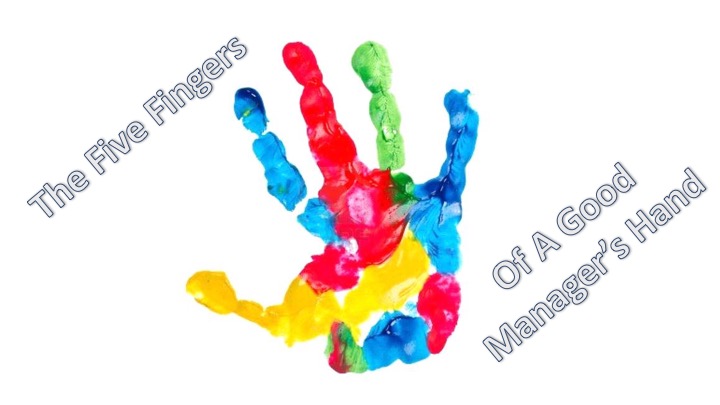
I’ll put forth the five skills that when wielded by the right hand can be an iron fist or a supporting pat. Think about how many of these you, or your managers have had formal training in. You won’t find them listed in people’s resumes but if you want to evaluate the potential of a manager ask a question about each of these five critical skills. Here’s the fingers to a great manager’s hand:

1) Thumb – Communication

By far the most critical, you can’t wield a hammer without a thumb and you can’t lead people effectively without communication skills. Adding complexity, communication is as much about how we listen as how we tell. It involves nuance like tonality, timing, tension, sincerity and directness even when you may not or should not delve into every detail of something going on. By far the most common complaint of employees of their managers stems from shortcomings in communication. Regular memos and, “My door is always open,” is not a communication strategy. Quality communication ranges from detailing business plans, needs and objectives, setting clear goals, driving results to conversations of personal performance, professional development, everyday life needs and events. It is both about making a staff understand and feel they are heard.

2) Pointer – Measurement

An old ’60s comedy used to award the Fickle Finger of Fate Award, a simple pointing finger. That selecting, accusing or celebrating (“We’re #1!”) digit is direct and to the point. Measurement must be also. When evaluations are purely observation or subjective differences of interpretation abound. Measurement criteria, detailed in advance and meticulously captured and reported takes away much of the subjectivity. The poorest excuse a manager has is that something can’t be, or is too hard, to measure. As we learn in programs like Total Quality Management you can measure anything. Effort, attitude, pretty much any seeming intangible can be made tangible by measurement. Now that measurement finger needn’t and shouldn’t be wagged in constant accusation but balanced with pointing out recognition of good news from measurement, and then you can get to the waving it around while popping celebratory champagne.

3) Middle Man – Accountability

With due recognition that the middle finger is more often cast in disparagement so too is Accountability. It is a sometimes cruel specter of reflection to have to actually do what you say. For a manager it is a duel edged sword that must seek commitments from staff and hold them to what is agreed or directed to be done but just as important on the other side, a manager must be accountable to his team with what he says he will do or is asked to do by upper management. When the man or woman running the department is an example by making excuses for what doesn’t get done, rationalizes away every bad result or otherwise puts themselves above the responsibility for behaviors they seek to hold others too they are doomed to dissent. Accountability needn’t be viewed as end results, in fact it is far more productively discussed as commitments to behaviors and efforts. A manager must have faith that if the right things are done in earnest results will follow. Otherwise, the problem is not likely with the staff.

4) Ring Man – Empathy

I’m not sure who or why cultures chose the fourth finger to bear our rings of graduation, our promises of engagement or our commitments of marriage but that’s their prime place. (If you are a pinky ring guy you probably shouldn’t be a manager and if you’re a thumb ring’er well, you’re too hip for this gig anyway). As the key to a great marriage is an abundance of empathy so too is it critical for great management. Not to be confused with sympathy, empathy isn’t about feeling what others feel it is about understanding what others feel and being able to interpret their needs or challenges. A manager’s ability to see the differences in staff’s lives, even only professionally, means a requirement to personalize an approach to driving results. “I treat everyone the same!” That’s the boast of a lousy manager. Don’t treat everyone the same, some need kicks and some need strokes but that is based on what they need to perform not on what you choose to dole out.

5) Pinky – Motivation

While perhaps the least grand finger in the hand this is what separates us from the four fingered cartoon characters. Being a great motivator might seem a bigger part for a great leader but the reality is that for good managing we need to use the other “fingers” for driving most of what motivates people. Getting to people’s self motivation is by far more effective and efficient than coming up with the weekly speech or the threat maker or rah-rah cheerleader. Great communication, application of measurement and being accountable with empathy will be enough of a foundation that you’ll need but a pinky push with words and actions, whether carrots or sticks, to motivate a team to great performance and results.

Of course there are many other good traits in great managers like delegating effectively, patience, being positive, honesty and subject competence but those fingers are for the the other hand. Most of what we accomplish we do with a dominant hand, a dominant side of the brain so the five fingers detailed above can give you a great start to reflect on where you are, or where you need to be to become a great manager. So salute, pump your fist, learn what you need, master what you experience and you’ll join the few of whom the staff says, “My manager’s great!”

(c) 2017 MyEureka Solutions LLC. Follow Tom on Twitter @TomFoxTrainer or visit

https://www.linkedin.com/in/tom-fox-a28b703/detail/recent-activity/posts/

for articles and information on sales, managing and leadership.


Tagged with: , , , , ,

So dust off your VCR and pop in “City Slickers” and fast forward to Curly sharing the secret to life…”1.” That’s right, one thing more than any other is the secret. I’ll spare you the existential version or debate omnipotence or destiny and share that from all I’ve seen there is, in fact, one success determinant more than any other, and that is Accountability.

The reason accountability is so universally applicable to success is that success itself is a highly customizable destiny. It is personal, relative and absolutely variable. What isn’t quite so variable is the relationship between success and accountability is nearly absolute. When we measure success, and that takes in the human emotional elements beyond the material, we see that those who have set goals with whatever success criteria they select, are most likely to achieve them in direct proportion to how they hold themselves accountable.

Every conquest has challenges and every success plan has obstacles, where accountability comes in is taking responsibility for what needs to be done: to do, to overcome, to circumvent, to deal with, to conquer. It’s also easy to see accountability in general or vague terms but when the application is systematic, even if by instinct, then the path to success gets recalculated as surely as that GPS lady will tell you, “recalculating route” when you miss your turn. When you take responsibility for whatever happens or confronts you and re-plan accordingly your accountability reroutes you back towards success. Those who become victims of the roadblocks and detours blame the elements and often give up the journey or settle for where they’ve landed.

3 Tricks For Professional Accountability…

Whatever your goals are and however specifically you’ve described them; SMART documentation or dreaming a vision, applying accountability tactics is the surest strategy to stay on course and reach your destination.

1) Translate Goals Into Behaviors

Goals are an endpoint. They describe accomplishment and sometimes what will be encountered or need to be overcome. For every success there is a corresponding behavior, or more likely a list of them that need to done to get to the endpoint, or around the obstacle. More so, these behaviors often need to be sequenced, have dependencies or can be dead ends. A full plotting of the behaviors needed to drive to a goal, how often they need to be done, when you will do them and behavior planning for the variables puts you in a position to drive actions that will lead to the goal and make clear why or why not you are finding success.

2) Find an Accountability Partner

Even the most diligent among us can be a pretty good rationalizer. We forgive ourselves what’s not our fault and readily find a parking spot for procrastination. Having a partner of equal devotion to success means you will have someone to detail your behavior plan to and the follow up on the doing, or trying, is far more important than discussing the results. In reciprocating, helping hold someone else accountable can be a mirror that helps you face behavior shortfalls honestly. Sometimes things work sometimes they don’t but how many times do you win without trying? Making a weekly list that you share and review with a partner means you have someone else to help you do what you say and know you should do and so do they. You don’t need a nag or a scolding to demotivate you but a little guilt knowledge so you won’t have to confess what you didn’t do can be just the urging you need to keep you driving on the right streets.

3) Embrace Measurement

Of all the factors on the road to your success by far the most ignored or manipulated is measurement. We use gut feels or approximations and are sure we know the big stuff but the very process of applying measurement creates inherent accountability. You are better off measuring effort than results, actions over achievement so it comes back to behavior. Don’t make measurement so micro or macro that it loses meaning or becomes an irritant but you know that if you want to lose weight it’s a very different process, and result, if you step on that scale every morning. The variations will be accepted when the long trend lines appear and the fact that you will measure your behavior means you are more likely to do it and the accountability circle is complete. Success, you have reached your destination…

(c) 2017 MyEureka Solutions LLC. For more articles see www.myeurekasolutions.com/thoughts or follow Tom on Twitter @TomFoxTrainer.

Please Comment, Like or Share if you found this helpful.


Tagged with: , ,

Before you pick a definitive argument for which side, art or science, more greatly influences success in sales let me assure the answer is yes! Cop out? Of course, but let me make a case. First though, let’s define professional selling in the broad view, it goes beyond what someone with a Sales or Account title might do and includes business owners, brand ambassadors and anyone with responsibility for revenue. With that wide a swath we can show where success has come from those who practice sales as an art form as well as those who have it down to a science and let’s not leave out those few Leonardo DaVinci types who have blended the two in true mastery.

My first experience dissecting the question came years back when I owned a sales training franchise and heard the quote by David Sandler, “Sales is a broadway play performed by a psychiatrist.” Not since watching the Bob Newhart show had my secret desire to be a Psychologist been so aroused. There’s no disputing the point that the better sales people understand how these two human fundamentals work, how we think and how we feel; can be tweaked, motivated, obligated, diagnosed, reflected, cajoled and yes, sold.

Training people in sales is slightly different than selling, although to get the opportunity there is surely the likelihood to need to walk the talk we tell. The difference is that as a teacher you have to understand which side of the brain drives your sales student. This is also why so many people benefit from a real commitment to learning the art and science of selling, most people aren’t evenly balanced right brain/left brain and so even seasoned veterans have room to learn, grow and develop their weaker selling muscle. This diagnosis is duplicated when a seller assesses a prospect, it gives them a clearer, more efficient avenue.

There are plenty of successful sellers who push and may have enough charm, persistence or exceptional product to win business. Equally there are those businesses that find sales without diligent process or a deep understanding of buyer psyche. Some people can paint a wall, some people can paint a picture but very few can create masterpieces. The DaVinci Code for selling is simply explained but a multifarious complex of parts. There are those savants who posses the instincts to move through interactions and demonstrate empathy, create obligation, instill trust and close deals but for most it is about identifying their weakness in feeling or thinking, and identifying feeling and thinking in their prospects that moves them to artistically scientific selling, or, scientifically artistic selling…both work!

The simplest synopsis explains that better, more efficient, more loyalty inspiring selling comes from a few basic components that include: having a plan, showing up, asking great questions, listening, converting conversation from intellectual to emotional, recognizing when it’s not an opportunity or making significant opportunity or consequences apparent, having empathy, reading body language (and micro expressions), making agreements, getting commitments, understanding and demonstrating value, and, in the best executions, getting the customer to ask you to sell to him (instead of the reverse).

Sure sounds like a lot of art and science mixed together doesn’t it? That’s why it’s fair to argue that professional selling is among the most challenging professions. Of course getting selling opportunities, closing deals, renewing business, product quality, customer service and the myriad of sales ecosystems that encompass every professional seller’s world all contribute to overall success. Appreciating, however, how much art and science need to be learned, practiced and mastered to optimize sales lets us see how much all of us who sell can grow and learn whether your Mona Lisa is already hanging in a gallery or still waiting to be crafted.

(c) 2017 MyEureka Solutions LLC. More articles about selling and success can be found at www.myeurekasolutions.com. Follow Tom on Twitter @TomFoxTrainer.

Tagged with: , ,

A SALES MEETING can run the gamut; from an annual island getaway that’s more perk than progress to the timeless tediousness of the weekly sales team staff meeting that’s more about saying the right rather than the real thing. Having attended, hosted, trained and spoken at dozens of different kind of sales meetings I have had the opportunity to regularly poll salespeople for their overall impression of sales meetings. Though a plethora of replies the common theme is, THEY STINK!

Why that is can have many reasons but the ones that don’t have things in common. Having attended many tropical paradise getaways to energize and inspire sales teams the response there often is, “Great, but not very useful for selling.” If you want the Limburger cheese reply ask sales people holed up in the office or local hotel conference room for 2-1/2 days getting cross-company updates, a new slogan or two, an obligatory 90 minute sales training and enough drowsy eyes to imagine there is toxic gas coming in the a/c vents…yeah, then the “Stinks!” are in abundance.

A common critique is, “My boss complains every week we should be out there selling but has no problem wasting days of our time sitting through an endless sales meeting.” Poor boss, you have great reasons for regular and annual sales meetings: effectively communicate as a team, get everyone on the same page, introduce new themes or products, bring missing skills to a group, inspire focus and motivate effort. So why do so many meetings stink so bad? More importantly, how do you fix them?

ANNUAL MEETINGS

I’ve gotten my share of checks for doing 90 minutes on a sales training topics, I warn sales bosses that one session on a topic may do a little for a few but most people will forget what they learned or be back in their bad habits within weeks, or days, of the meeting. (But, yeah, I take the gig anyway…a guy’s gotta make a living!) As it relates to training a Sales Meeting actually is a great place to introduce a new trainer, new approaches, techniques and communication ideas but none of us get much out of one session so it should at least run through a meeting and should be followed up with future reinforcement. That’s a training approach, here’s other keys:

  • A keynote speaker is also requisite. Likely not the CEO who may get time but keynote needs to be emotionally memorable. You have to move people and have a connection, even a lose one, to your theme. People remember what they feel far more than what they hear:
  • Management should spend significant time listening and not do all the talking, that goes for support departments that participate as well. Don’t make it a polite fest, if there are real issues get them out, identify them, and make a follow up plan.
  • A theme is great but it must be organic, logical and light on schlock, glitz and schmaltz. Music can be awesome but don’t beat themes to death.
  • Reinforce the core values of the company and the leadership with examples that stimulate empathy and motivates coming together. Not every topic has to be about process or progress. Take time to reinforce the values the organization prizes.
  • Make people who attend feel important. Connect how their contribution helps causes both bigger and personal and mix general with specific examples.
  • Money motivates salespeople is a cliche and it’s true, there’s nothing wrong with money as a reward but understand people yell about money but long for recognition.
  • Energy is key, if the speaker has none they get 10 minutes, tops, or none! Better a good speaking junior staffer than a boring Director (don’t worry about hurting feelings, invite both for the Q&A and say it’s about highlighting future stars). Beware the tiresome CFO who wants an hour! Insist on energy and break it down into a few short sessions rather than one monotonous one. Require dynamic energy in every session; use great music, let people get up regularly and move (have a walking session–odd but effective!) and make it clear when they have windows to check email and return calls otherwise energetic attendance is mandatory.
  • Think process. If you focus talks on results you could have said that in a memo. If you’ve got smart, willing people then focus on what behaviors provide results and what time management mistakes rob efficiency. Make HOW as important as WHAT.

THE WEEKLY MEETING

The “regular” sales meeting, regardless of frequency, shares common problems with any meeting so there are a host of rules to have an effective meeting that aren’t specific to your team’s selling. Ask yourself of your selling professionals what their participation motivation is. What cues do they get from the meeting leader? If a leader likes good news, guess what, you’ll hear all kinds of optimistic assessments. Salespeople are competitive so it can be hard to share failings. Frat house attitudes where ridicule is part of the culture will rob value so consider how to make a safe and worthwhile environment, and confirm it with the attendees. Othewise:

  • Respect time, start on time regardless of who is missing and if you are the leader, for goodness sake, be there early and get it started so people know late means scorn.
  • Distribute an agenda no matter how routine the session gets, time out every area to discuss and acknowledge if you are running long, stop or get permission to continue for X minutes more–even if you’re the boss and figure you run the meeting. Make it clear in advance what’s required to bring or discuss with attendees.
  • Participation is meaningful and should be required. Again, the boss needs to listen not just talk so good questions are key. Change the topics up, they can be micro or macro but get everyone to give input even if that’s an around the room with, “What’s the best thing that happened to you this week?” or, “What surprised or bothered you this week?”
  • Make your estimates be based on behaviors or tasks accomplished. So saying one client is 75% or another 50% is based on where one is in the selling process rather than guessing based on prospect conversations–when we all know prospects lie all the time and salespeople like to pass on rosy pictures.
  • Have a short “share” session of maybe 10 minutes in every or regularly. Get another department head to inform or a vendor or better still, a customer. Bring a little surprise value and people will anticipate a positive event

A Sales Meeting doesn’t have to be a prison sentence and it isn’t penance for the success you just missed. An opportunity to effectively share and listen, teach and inspire, inform and surprise takes work to create…but it won’t stink!

© 2017 MyEureka Solutions.


On a day where the news is consumed with senselessness, yet another mass shooting, purpose becomes a paramount talking point. For some it means trying to know why, perhaps because that can feed their purpose: political, social, psychological, curiosity. For others it is trying to rationalize the unimaginable. While a sickening example of man’s inhumanity toward man it has it’s lessons my purpose here is to try and make something positive out of something so seemingly meaningless. My professional purpose is about bringing lessons to my clients, friends and followers so they might take actions to find their success, or to ask help finding their success. Purpose, in all it’s aspirations is a destination.

Let’s define Purpose as the reason for which something exists, is made, done, or used. A resoluteness or to set as an aim, intention or goal. Given this broad definition we can apply purpose to the very big, “why are we here?and the very small, “get these done by 5 pm today!” We have purpose imposed upon us and proposed to us from the practical to the metaphysical. Given this vastness of purpose’s purposes let’s keep the focus more narrow and look at it from the lens of professional success. Surely even that context has dozens of sub-purposes so here are three purpose missions you might make sure you have locked in to allow a cascade of meaningful actions in your professional and your personal life. (A caveat is that I don’t believe in having one without the other!)

Mission 1 – The Higher Purpose

Any recovery therapist or 12-stepper will tell you that the biggest indicator for success in that program is the ability to acknowledge, and embrace the higher power concept. For many that creates conflict between ancient catechism and knowledge and ambiguity. That complexity is in altering destructive behavior. For a success model sans addiction, with only 3 steps here, the higher purpose needn’t be dogma but it must be your greatest truth. That isn’t a static ambition and your truth at 20 might be quite different than your truth at 40 and again at 60. Evolving our higher purpose allows us to direct our desires but the key is they have direction as a result.

Your higher purpose may be materialistic, may be practically defined or it may be more esoteric. “I want to be a Director by the age of 35,” and, “I’m a man of faith,” can both be defining higher purposes. Obviously, life takes on more depth when you see yourself in context beyond your minutiae but it must be sincere. For many their “ultimate” purpose is yet unrevealed, awaiting a significant life event, or an unrequited spiritual peregrination. Wherever you are in your quest for meaning claim your higher purpose now and build your life plan from that square one. No plan is perfect, no life charted without circumnavigation but if you aren’t planning to get somewhere you’ll likely get there.

Mission 2 – The Practical Purpose

There’s really only two reasons any of us work, money and satisfaction. Perhaps the higher aspiring make it money and love. The more cynical make it love of money. Again, the most important thing about success is knowing you get to define it. The trick is you can’t lie to yourself for too long (though we’ve all seen really strong efforts there for sure). To find the kind of success that affords happiness as a requisite byproduct you have to rationalize both of these factors. Does a certain dollar figure drive you, six figures, seven, eight? Why? Anyone can set a number, realistic or ambition but what sets the success course here is understanding the relationship.

You can be rich and you can be happy, you can be poor and be unhappy but the inverse of both is just as likely and there’s no guarantee the relationship between dollars and desires has a set score. Be practical, keep your purpose for money identified for its use not just its collection, though I guess you can argue that’s a valid purpose too. Factor in what satisfactions you need to be happy with as well as, more importantly, what are you able or willing to sacrifice or put up with to enable that pursuit with passion. The road to gold is rarely smooth but overpaying in sacrifice, or over-striving for money without meaning is not likely to bring the kind of success that has peace of mind as a bedfellow.

Mission 3 – The Joy Purpose

If you aren’t interested in having joy as a chaperon on your life journey then we aren’t meant to be sharing views or advise. I find it hard to consider any joyless life a success, in fact in the circular nature of purpose we might find joy straddling the higher purpose mission. For this thought exercise though take joy out of the spiritual and put it in the empiricism of doing. What are the first three things that come to mind if you are asked what you do to bring yourself joy? Now ask, what are the three most important things you do that bring joy? If those answers are the same you’ve probably got it figured out fairly well. If you missed on all three you may have some effort re-alinging to do in your life.

When we train behaviors and attitudes we acknowledge you won’t always feel like doing what you know you need to do. If, however, you do the things you need to your feelings about yourself are like to become unambiguous. You can’t feel your way to action but you can act your way to feeling. You have to make a priority of acting on your joy. It will be way more than three things but that’s a start. Identify your joy actions in your work, of course be deferential to the ones where the consequences are most positive. Leading a successful team or task effort is probably a better joy mission than leading the celebrity gossip brigade in the break room, but hey, it’s your joy, it’s your success, it’s your life.

Purpose gets us out of bed, gets us working, brings home the bacon and brings out the love we need to give and receive. That so many work, and live, with a poor sense of purpose may be the reason too many lives end up tragic. Not because the consequences are catastrophic like in a sad few cases in the news but in what is missed by too many. Don’t miss out on your life mission(s), your success and your joy. I hope that’s your purpose, I know it’s mine.

© 2017 MyEureka Solutions. For more thoughts www.myeurekasolutions.com/thoughts

Tagged with: , , , ,

If you hear, “Our country is divided” one more time are you ready to scream or has it all just become background noise? No matter what side of anything you are on it’s blatantly obvious our binary nature has manifested disunity on a greater scale than we’ve ever recognized before. So what about your company? Does the nation’s divide detour around your little enclave? Is your view from an ivory tower or firsthand observation in the break room? If you think all is well maybe you might want to look under the surface for “United we stand” might really be “Divided we fail!”

Political and media discourse are clearly gasoline on this fire so to imagine these conflicts of conscious and imagination haven’t permeated our workplaces is naive, and look around to see if you’re throwing kindling on the fire. Certainly there are clusters that may be insulated or like-minded in your company but even if disunity is minor, or seemingly so in your company let’s look at the potential downsides. Trust, teamwork, effort, motivation, morale, cooperation, guidance are a few of the “success essentials” that clearly take a hit when strong points of view are expressed in opposition and winners and losers replace comradery. Is there anything you can do? You bet!

3 Ways To Inspire Harmony

1) What The Leader Says & Does: Okay, it seems obvious that leadership by example is key in any organization, influencing that example downward is just as key. Unfortunately the self-recognition of this is dominated by the “does” and often overlooks the “says.” Sure, you can hoot the cliches to avoid religion and politics at work but be real, you don’t need to have screaming matches or involved debates to have positions known. A simple comment, a smug expression or the “joke” you think is funny that gets accommodating chuckles from intimidated subordinates can be every bit as damaging as brow beating stump speeches. Understand your power dynamic, underlings learn it’s better to be smart than heard so suppression becomes instinct. To those who can’t or won’t suppress do they become pariahs and/or champions and wear the differentiation like a badge of honor with a clique of lemmings? What does a them and us construct mean for your business? It means regardless of your social and political opinion don’t misunderstand your business power position with a moral high ground. Perhaps the best compliment a leader might get is that his/her subordinates are sure they are politically aligned–and get that reaction from both sides!

2) Embracing Diversity Diversely: You can fill a library wing with diversity literature; training, value, supporting. Thing is, it’s very hard not to recognize similarity with ourselves and value it more highly than something different so there’s often history of people who “see things the right way” getting ahead (or look or act). If you are going to buy in to the value of ethnic, age, sex and experience diversity as a value to your company (if not go argue with the library wing) then you have to accept that diversity carries with it various social and political consciousness. Now if you are an organization with a united singular cause, say the ACLU or RNC then what and how diversity is valuable has a perimeter. For most business functions whether a person is red or blue won’t influence their skill or ability. It may, however, influence their perspective, their point of view and their admiration or contempt for opposing views. Recognize while you aren’t responsible for the past per se, you can’t hide from the fact that where we all is influenced by how things were and that can be a very different reality one to another.

In order to optimize the diversity you have, or to broaden it for profit motivation, you need only recognize that those differences exist, and have their own value. That our binary nature means there will be two sides to most stories and while one may be a majority, even an overwhelming one, that doesn’t invalidate or undervalue the other. A worker might, for example, disagree with a tax proposal compared to a business owner. If the business owner demeans the opposition he will create conflict in the opposer. Not that business owners are obligated to be wishy-washy or not have strong opinions but they can simply put their views in terms of how it benefits and has purpose, a greater good like more profit means hiring more help or growing salaries. Explaining things in a bigger picture context, without fire and brimstone, and simply acknowledging that, “I know some people don’t agree but I think this is important for our company,” is a position that is easy to respect. “Those idiots against this,” is, hmmm, a bit less so.

3) Demonstrate Your Ethics: Times used to be simpler. The bosses were Republicans, the unions were Democrats and the middle managers were idealists waiting to make enough money to become Republican! One of the reasons our division is palpable today is that it has become integrated. What hasn’t changed is that whatever your opinion of the issues of the day integrity is a far stronger virtue for admiration to unite than opinion to divide. We’ve all worked with people with whom we disagree but what enables respect is the integrity they demonstrate. Your morality is respected when it is displayed in deeds rather than shouted from a pulpit. Encouraging unity in a functions like sponsoring a neighborhood clean-up or a holiday party for kids in a local hospital are examples that allow connections of the heart that can overshadow expressions of the mind. Show that you give, live what you feel and share your best self, that might help eclipse the parts others may oppose and then you can motivate business goals to unite purpose.

Corollary to that if you suggest “to hell with that customer” when your written mission is “customer is king” then political or social differences will become a magnifying wedge and excuse to devalue any other message. People can work well with people with whom they disagree but repudiate those they disrespect. You don’t have to care about that, unless you care about having business success that grows, profits and is admired.

© 2017 MyEureka Solutions. www.myeurekasolutions.com

Tagged with: , , , ,

There are no shortage of frustrations in business. Many times as we are shaking our head in despair we imagine our problems could be solved, or at least greatly helped, by reorganizing our department, team or company. Many times a Re-org is an appropriate thought, particularly if you’ve experienced significant changes in your volume (up or down), efficiency, automation or product variety, or changes to your staffing level or skill sets or process requirements.

There are also times when the problem is not how you are structured or organized and a reorg is a mirage, distraction or pipe dream. For now let’s suppose you’re on solid ground in benefiting from a re-org. There are a few “tricks” that can help you gain confidence in your choices. A process to make sure you get it on the button with the roll out; basically to organize your reorg.

Trick #1, Ask: Is it the People or the Position?

Loyalty can be a critical employee and leadership bond, but can also be a dragging bondage so you must ask yourself do I feel the need to reorganize around staff deficiency or do I need to redefine the requirements of the position? In truth, both things happen. Decide honestly if you need new people, performance or new positions/job descriptions. We sometimes try to hide someone’s weakness whom we want to keep by redefining their job requirements. You may or may not be doing yourself or the employee a favor when this happens but recognize that the ideal way organizations work is to have jobs that are defined by requirements to make processes optimal and are filled by people who meet those prerequisites and we manage them to excellence in their performance. Organizations that define jobs around people may solve one problem but they are likely moving, lessening or postponing the problem down the line.

Trick #2, Discover what is Skill, Will or need to Kill

We look at jobs and job descriptions primarily as details about how and what they do in processes. What we too often undervalue are the specific skills and their requisite levels of expertise in each of our org chart boxes. True, while several of the same job descriptions will be populated by people of different skill (and will) levels it is critical to assign the success level of both skill and will to all positions. How much self motivation or oversight does a job require? Additionally, make sure to ask what aspects of a job do you need to kill, replace or stop doing. Every reorganization, no matter how minor or major, should be an occasion to take a fresh look. Like cleaning out a closet, we may try to convince ourselves that sweater we haven’t worn in 8 years is still good to keep, and doesn’t do any harm up high on the shelf, likewise there are probably process remnants and artifacts and even skill or will elements in your jobs that maybe should end up in a giveaway box, next to that lovely, but useless sweater you’ll never wear.

Trick #3, Visualize but identify what’s Core, Less and More

Depending if you are a visual or auditory type person you may relish drawing lots of boxes and double arrowing reporting lines on scrap paper or computer apps or you may prefer to talk it out with people, ask questions, make notes. For best results you need to do both. Drawing the org chart is a critical visual to point out things like over-stretched reporting lines or overburdened sections. You get a basic view if you are developing a more vertical or horizontal organization, either may be appropriate, and it helps you assess things like salary values or inequities. Too often though we draw boxes and then write job descriptions but we lack a catalyst for understanding change. Fundamental to your re-org is the fact you are building in change.

While Change Management is it’s own topic beyond our scope here a great little analysis tool is to take every job, and/or each person you are assigning to an org box and detail in writing what is Core to that job, and it doesn’t hurt to do this venture with all or most of your team. What are you asking the position or person to do More of and what do you want or need them to do Less of. The core sets the parameter but doing more or less can be about prioritizing, load balancing or changing how or what gets done when and why by whom.

Sometimes we reorganize a person’s job with what feels like a tweak or maybe it justifies a promotion but if you are asking someone to do more of something they often need to do less of something else to make room for new or extra tasks or responsibilities, either way it needs to be clear. If less is needed then can it be delegated, automated or eliminated? As you move people and draw lines remember it all comes down to process and responsibility so look at the core, what more and less is needed for every job in your organization, even if on the periphery of a re-org it is a valuable technique to continuous improvement. That, after all, is what your re-org should really be about.

© 2017 MyEureka Solutions, www.myeurekasolutions.com


Tagged with: , , , , ,

Even though you still haven’t vacuumed the beach sand out of the back of the SUV and there’s still a few sprays or squeezes of SPF left in your sunscreen you know summer is coming to an end. The days are shorter, colder and the work you procrastinated away all summer long has piled up, or sits right where you left it July 4th. So a long look in the mirror acknowledges, “Time to get back to work!” For sales, it means getting things in hyper gear so you can let the tail follow the dog and bring home a successful year.

Whether a road warrior or business owner you know that a good part of successful selling is simply effort. If you’ve been around a while you probably also know that working smart as well as hard is the real margin maker. But, whether you have all the years and scars or still have your fresh face of optimism everyone can benefit by smart focus. Don’t just get in and “plug away,” sure you’ll feel the hard work but for the real payoff dig into these 3 ideas to really power your fourth quarter selling.

1.) THE UNEXAMINED PROCESS YIELDS DIMINISHING RETURNS!

Processes are living things, they change, evolve, refine and slip. Most selling professionals will tell you they have a good process and if they get in front of the right people…yadda, yadda, yadda. Process slippage happens, we lose the edge on what we need to do when. What we don’t like to do gets pushed aside and what we hope will work gets more effort. “I’m not going to make those calls because my social media marketing could bring me so much more.” That’s a typical rationalization, so is, “I’ve been doing this a long time, I know how to sell.”

In both cases there is truth but there is also cover, sometimes they are scabs over old wounds, sometimes they are using hope as a strategy. Neither makes you money. The two elements of your process to examine now are first, how are you getting in front of decision makers and second how are you aggressively converting leads into deals? This is true whether you are selling yourself or responsible for a team. You may have formal or informal training in each or perhaps you just learned at the school of hard knocks. To get the plan for how you will surge your sales re-construct a prospecting plan by honestly evaluating your strategy. Make sure you have a system to move prospects to customers and quickly disqualify pretenders so your valuable time is put to good use.

2.) ATTITUDE AND MOTIVATION BE DAMNED, SCHEDULE YOUR WINNING BEHAVIORS!

The good intentions lining your road to gold are often dented by a shortfall from the motivation motor and life isn’t always rosey so sometimes we dwell on the thorns. Not feeling “into it” is the chief excuse in procrastinator’s handbooks. What you need to do is take the analysis you did in step one and put your honest, measured, evaluations for prospecting into your schedule. Don’t settle for the “I’ve got to do more of this,” and the “No question I should do more of that,” and being busy isn’t the measuring stick.

To Nike them (just do it) you need to put them on your schedule. Not just a week at a time but at least a month at a time. Create a count of how many whats you need to do and instead of vague future references to what you’ll do let your calendar tell you what to do today! Who to call, where to go, who to write, how many, when, etc. Let your goal be to do the scheduled behaviors you have verified to be successful, even the ones you don’t love.

3.) ACCOUNTABILITY LEADS TO COUNTING LOTS OF MONEY!

So many skilled and hard working sellers do these first two steps and get average results rather than dynamic. Why? It’s easy enough to rationalize luck or unavoidable distractions and sure, that can be true. There’s talent of course but by far the biggest reason I see so many clients struggle with results despite effort is a missing layer of accountability. It’s a sad truth that the intuition needed to strategize and ingenuity needed to schedule can get derailed because it just didn’t get done, the un-Nike. Guilt, fault and despair are good for self pity but they aren’t taxable and don’t help but having an accountability plan does and I’ve seen two kinds have phenomenal results:

Peer Pairing: Find a partner with similar needs to you to keep your feet held to the fire. There’s no outside consequence other than your own commitment but you get someone that you can meet or talk with regularly, weekly usually works (schedule it!). You exchange your plans for prospecting or following up on leads with clear quantities identified. You review that plan the following week reporting on completing the tasks. Your partner duty is to nod and acknowledge any distractions or delays but ask the question, how do we get this done now? How do we make up for that this week? Conversely, your success completing your planned tasks becomes competitive and contagious, two characteristics in all good sellers.

The second option is with a good coach. This can be internal but there’s a real hedge if it’s the manager or boss. Our instincts to frame things in a positive light, make ourselves look good whatever the results, can fog the harsh light of reality that a more disinterested party can provide. All selling business owners or sales teams can benefit tremendously from a coach who can be a regular accountability partner. We let you look at yourself honestly and face why things didn’t get done or work out and hold the opportunity to try again, try another tack and get both encouragement and information from a debrief on why the best laid plan went kerfluey. Your doubts are held in confidence and we look to have you commit to what you will really do to find your sucess.

Coaching doesn’t have to be time-consuming, thirty minutes a week might do it and your nature to try and please your guru means a better chance you’ll go and just do those behaviors. It’s the best ROI deal out there because whether it’s a company resource, an executive counselor or a Skype trainer you will be investing in you. That’s where every good salesperson should see the greatest return.

© 2017 Myeureka Solutions LLC

Tagged with: , ,

I have freedom–that’s my great joy. Sure that feeling’s under seize if you watch the news lately but I mean job freedom. I also recognize my situation is unusual and while it is well earned, in my humble opinion, it was not always the case. Most people aren’t their own boss, don’t set their own hours, their own priorities and income and find themselves feeling far from free and far from joy in their job.

Okay, so life’s a bitch…and then you die. Work sucks and if it wasn’t hard it wouldn’t be called work. We can cliche all day but when you get right down to it there’s really only one word that, if accomplished, makes it all tolerable if not downright pleasant. That word is “JOY.” Dictionary-wise it’s simply a feeling of great pleasure and happiness. For what percentage of our workforce do you think that is an apt description of their state of mind or being?

We have many efforts to boost morale, some strive hard to have a culture that allows for it but have you ever seen any company put as an employee’s goal, “Find and experience joy in your job as often and for as long as you can with only minimal interruptions to the feeling.” Not many top executives or business owners think in that light, occasionally even feel they need punishment to accompany their success. How about if we take a minute and pretend that goal is our new goal? Like all goals we’ll need a plan, and like every plan we will have to anticipate challenges, sometimes beyond our control that threaten it’s success but it’s even measurable if you thing about it. We could get downright consultantly with a plan but here’s a shot at a top 3 finding joy strategies:

3 Ways To Find Joy When It Is Hiding Hard:

1) It’s Your Attitude So OWN It! How you feel is a decision. Granted it isn’t always a conscious one and influences, both positive and negative are surely apt to bombard the matrix and drive your reactions and then your emotions. The thing is, if your goal isn’t to be in a state of joy then why would you be making decisions and corrections to get there, and to stay there? When enough bad things happen it seems like putting your head down and plowing on can be the only way to 5pm and you’ll worry about finding joy after work. Great, your life and family outside of work should be a source of joy but the situations are similar in how your emotional state is nourished or attacked. Only by deciding that joy is where you want to always be gives you the focus to make things happen so that becomes so in work and in life.

2) Have Empathy But With A Shield. You will have enough challenges thrown directly your way to challenge joy so you have to beware wearing other’s pain and challenges. Empathy is a great tool in business (and from keeping you from being a psychopath) and I teach it’s application in sales but don’t confuse it with sympathy. One is an understanding and appreciation of an external emotion and the other is feeling an emotional connection. “I can appreciate how hard it is for Jane,” is empathy. “I feel so bad for Jane,” is sympathy and how can you feel your own joy if you are wearing Jane’s pain? You can’t, so whether it is shielding yourself from external forces or reacting to a direct boss who’s a PIA, you’ve heard, “don’t take it personally.” Well, keep your own person in your own place of joy and let your reaction to the emotions that confront you all day be observed on your shield held close, but safely away from you.

3) Little Things Mean The Most. It sounds trite to imagine that some minor, inconsequential element can remedy your ills to stay in joy when major arms of trouble can occur at any moment, at the worst moment, on top of another bad moment and then manage to stay in your head when you aren’t in front of it or not even at work. Find something you know gives you joy. Doesn’t matter if it as crass as a paycheck or as innocent as a great cup of coffee. It might be as lofty as your inner faith or as base as a daily water cooler chat. Point is, it has to matter to you, it has to be available and enduring and you need to go there regularly and especially if you stray from the path of joy. How do you feel when someone smiles at you, try initiating that, the tired cheek muscles are well worth the effort.

Okay, lot’s of things are easier said than done and no system for happiness is perfect. Surely an office looking like the Valley of the Dolls cast with perpetual semi-satisfaction grins would be more than a little weird. Still, keep these thoughts in mind, everyone works better in a positive, nurturing, respectful environment. The goal of every goal is to accomplish the goal, celebrate and feel joy at the accomplishment so why not make joy a goal and keep it along for the ride in every goal. Finally, many of us get used to being victims, having someone to blame or even enjoy the sense that hard things block joy. Not true, joy is a state where you can establish permanent residence, you have to work for it just like any other thing that’s worthwhile. There is choice here. Picture being around someone who is without joy and someone who exudes it. Who do you want to be around. Who do you want to be?

If you have a comment about how you find or keep joy when things get hard please leave a comment to share your success strategy...

© MyEureka Solutions LLC – 2017


Tagged with: , ,
Tom Fox